






Guide
An LGBTQ+ guide to self-collection for cervical screening


What is a Cervical Screening Test?
A Cervical Screening Test checks for human papillomavirus (HPV) — a common virus and the cause of almost all cervical cancer. A HPV infection that stays in your system for a long time can cause changes to the cells lining your cervix and develop into cancer. Finding HPV early can prevent cervical cancer.
Routine cervical screening matters because:
- HPV usually has no symptoms, so you may not know you have it.
- Screening can detect HPV, so it can be monitored or investigated before cervical cancer can develop, helping you stay healthy.
- Most cervical cancers occur in people who have never screened or are overdue to screen.
For your Cervical Screening Test, you can choose to:
- Collect your own sample from your vagina/front hole using a thin swab (self‑collection), or
- Have a healthcare provider – like a doctor or nurse – do the test for you using a speculum and a small brush to collect a sample from your cervix
What is self-collection?
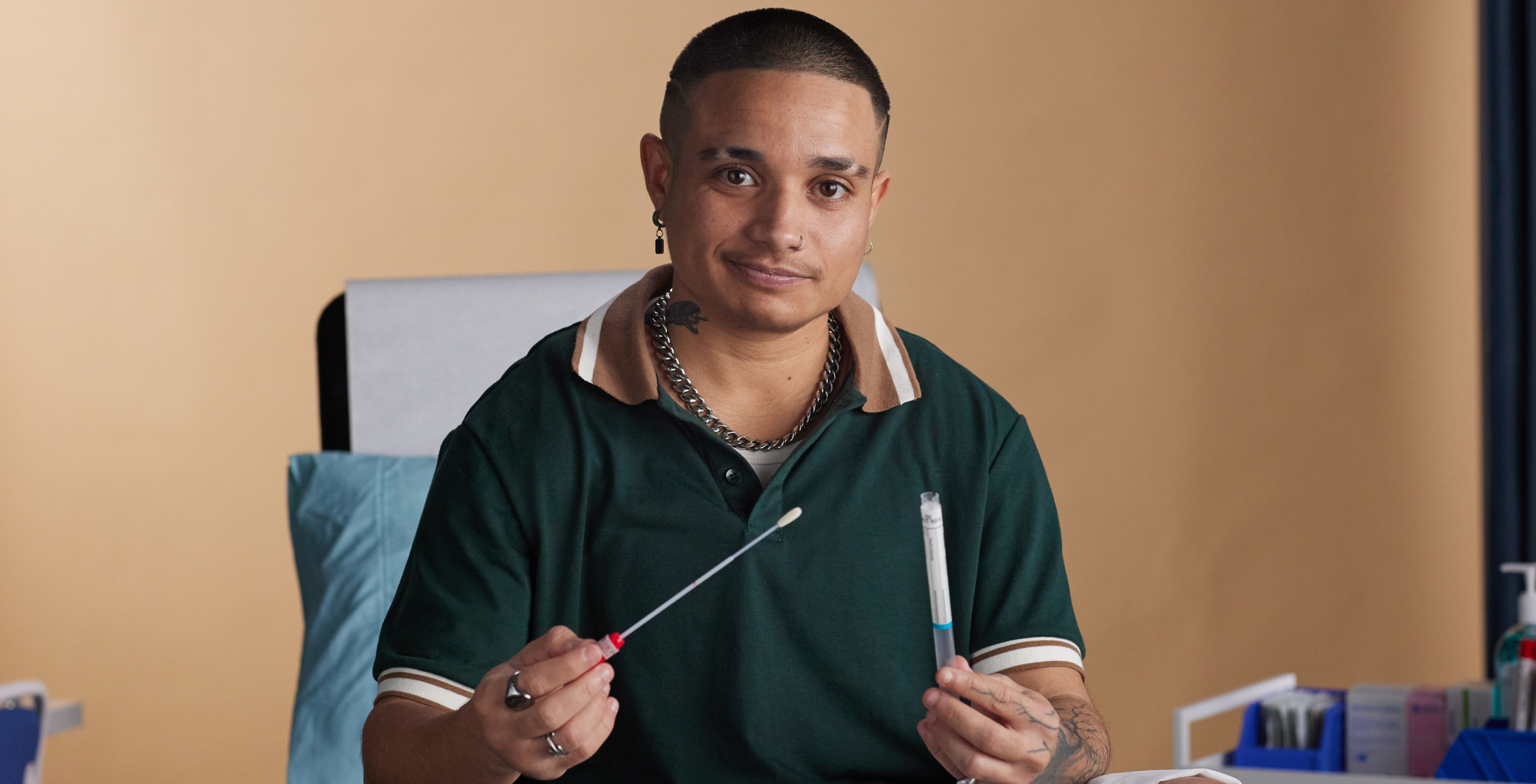
Self-collection is the process of collecting your own sample of cells for lab testing as part of a Cervical Screening Test.
Self-collection may be more comfortable for you, as it is done using a thin swab inserted a few centimetres into the vagina/front hole. A self-collected sample is safe to be taken from the vagina/front hole because HPV can be found in both the cervix and the vagina/front hole.
Collecting your own sample is simple, effective in detecting HPV, and convenient. It is an option for all eligible people without symptoms.
Self-collection differs from a Cervical Screening Test completed by a doctor or nurse. During a healthcare provider-collected test, the doctor or nurse uses a speculum to access your cervix and a brush to collect a sample of cells directly from the cervix.
Self-collection can increase privacy, as you can collect the sample yourself in a private area at the clinic such as a bathroom, separate room, or behind a screen.
If you prefer not to collect your sample at the clinic, you may be able to take the swab home. Not all clinics offer this, so check with your healthcare provider. After you collect the sample, make sure to return it to the clinic as soon as possible. They will send it to the pathology lab for testing and receive your results.
Who can self-collect their Cervical Screening Test?
Anyone who:
- Is aged 25-74 years
- Has a cervix
- Has ever had sexual contact (of any kind)
- Is due for cervical screening
Everyone eligible for cervical screening can choose either to collect their own sample or have a healthcare provider collect a sample from their cervix.
Self-collection is not suitable for:
- People experiencing symptoms such as unusual bleeding, pain, or discharge
- Those who need follow up testing or have had previous abnormalities
How to collect your own sample
- Wash your hands.
- Remove the swab from the tube packaging – hold the end without touching the soft tip.
- Insert the swab gently a few centimetres into your vagina/front hole – there is usually a mark on the swab to indicate how far you should insert it You do not need to reach your cervix.
- Rotate the swab in a circle for 10–30 seconds. It may feel odd but shouldn’t hurt.
- Take the swab out carefully.
- Put the swab back into the tube and close it securely.
- Return the tube to your healthcare provider.
What to expect after the test?
Your healthcare provider will send your sample to the pathology laboratory and contact you once they receive your results. Most people will not need further testing and can safely return for their next test in 5 years. If your test result is invalid or abnormal, you may need to do another test. Depending on your results, this may include a clinician-collected Cervical Screening Test. Your healthcare provider will explain what happens next.
Keep reading


Or explore more on

We’ve got you covered
Your free Play Pack includes everything for safer sex, delivered discreetly because you deserve to focus on the fun stuff.